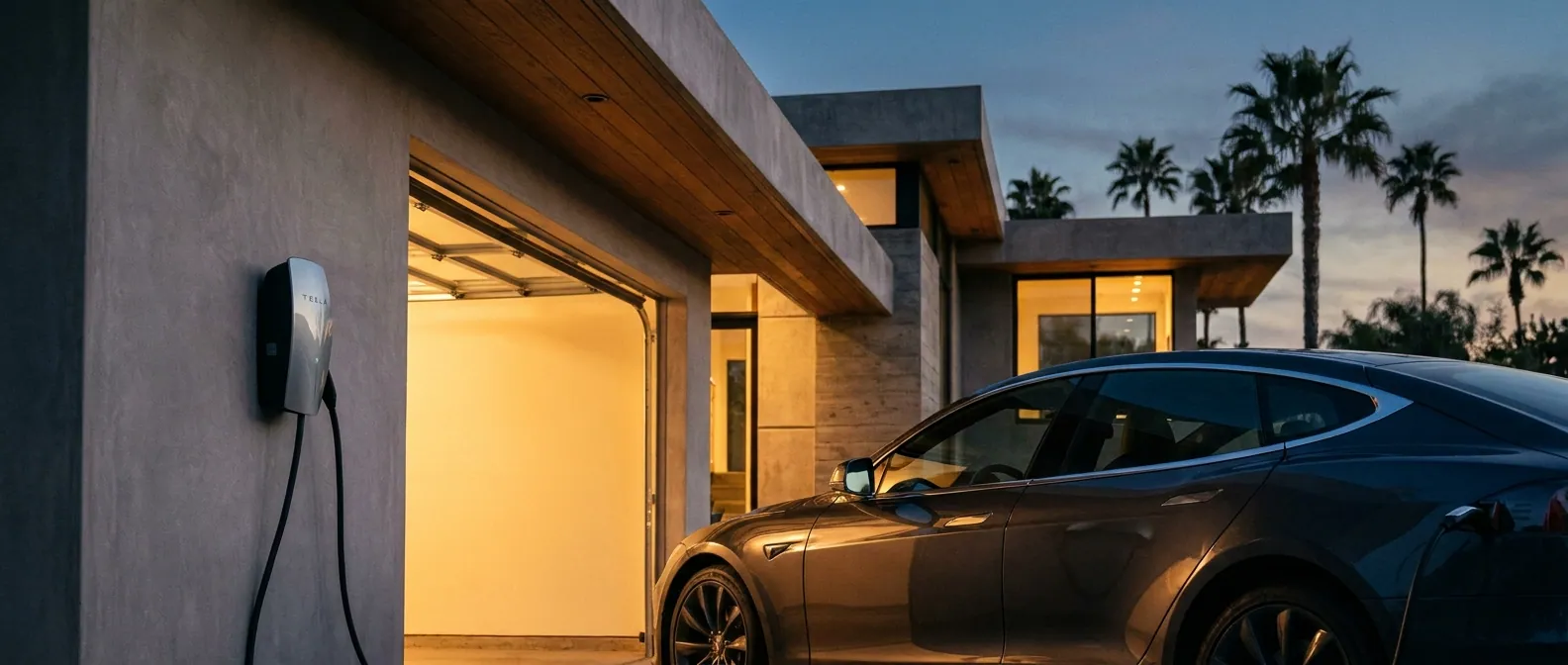
Who can install a Tesla Wall Connector?
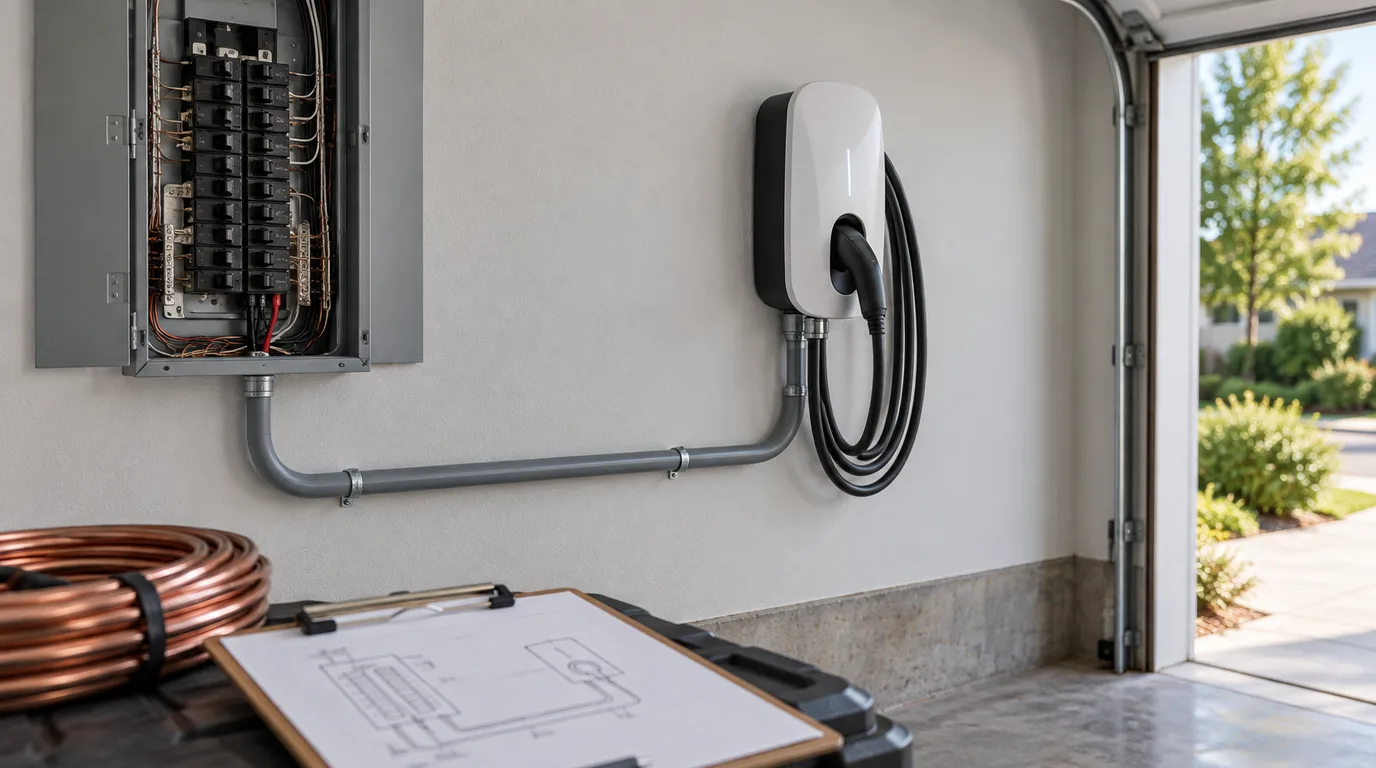
A Tesla Wall Connector is installed by a licensed, bonded and insured electrician who pulls the permit and meets the inspector for the hardwired 240 V circuit behind it, and Tesla estimates the install cost of a Wall Connector at $750 to $1,500 as of October 2026. The default breaker on that circuit is 60 A. Two credentials sit behind the work, and good bids carry both.
- The state credential. A licensed contractor, bonded and insured. That is what lets a permit be pulled and what stands behind your house if the circuit fails. Rizzo Electric has carried it through four decades of work in Orange County, Los Angeles and Arizona.
- Tesla's own certification. A separate program on Tesla's side, tied to the Wall Connector and its warranty. We walk through how to check a company's standing in Tesla certified installer requirements and how to verify them.
Ask for both in writing before anyone quotes a price.
What size breaker for a Tesla Wall Connector?
Tesla's installation documentation is direct: "The default breaker size for Universal Wall Connector is 60 A," and the unit must "connect only to a circuit provided with 60 amperes maximum branch-circuit overcurrent protection in accordance with the National Electrical Code, ANSI/NFPA 70".
For the Gen 3 Wall Connector, Tesla says: "For maximum power output, install a standard double pole 60 amp circuit breaker."
The car decides whether you need all 60 A. Tesla publishes the recommendation by vehicle for the Gen 2 Wall Connector:
| Vehicle | Onboard charger | Recommended breaker | | --- | --- | --- | | Model S, Model X, Model 3 Performance, Model 3 Long Range | 11.5 kW (48 amp) | 60 amp circuit breaker | | Model 3 Rear-Wheel Drive | 7.7 kW (32 amp) | 40 amp circuit breaker | | Two or more Wall Connectors (power-sharing among 2+ Tesla vehicles) | N/A | 100 amp circuit breaker |
The older High Power Wall Connector supported a "Maximum 100A Circuit Breaker", so a bid citing 100 A for a single modern unit is sizing for hardware you are no longer buying.
Tesla Wall Connector install requirements to check on the bid
Read the written quote for these five lines before you sign it.
- The load calculation. The default breaker for the Wall Connector is 60 A, which covers a continuous draw of 48 A. The bid should name what your main breaker is rated at, what the calculated existing load on the service comes to, and how much headroom is left once the charger is added. A bidder who has opened the panel, read the label and the meter, and written those three numbers down has done the work. A bidder who sized it from the driveway has guessed.
- The breaker. A double-pole 60 A for full output, or a 40 A matched to a 32 A car from the table above.
- The conductors. For a 75 degree C rated circuit breaker, Tesla specifies minimum 6 AWG, 90 degree C THWN-2-rated copper wire for the conductors. The Wall Connector terminates copper, so copper is what should appear on the quote.
- The conduit route, in feet. Panel to charger, with the method named: surface conduit, in-wall, or trenched.
- The permit line. Named, priced, and pulled by the contractor.
One item you can strike if a bidder adds it: Tesla states that "External disconnect switches are neither required nor recommended."
How much does it cost to install a Tesla charger at home?
Tesla's estimated install cost for a Wall Connector is $750 to $1,500 as of October 2026, which is labour and materials on top of the price of the unit itself. Five things move a quote above that range.
- Run length. Every extra foot of conduit, every turn, every stud bay drilled.
- Trenching. A detached garage means a trench, conduit rated for burial, and backfill.
- A panel with no headroom. When the service cannot carry another 48 A continuous load, the work in front of the charger is an electrical panel upgrade with a price of its own. See when an EV charger needs a panel upgrade.
- Permit and inspection fees. Set by your city and billed through on the job.
- Finish work. Surface conduit is quick. Fishing cable through a finished wall and patching drywall is hours.
Put rough numbers on your own house with our EV charger installation cost calculator, then ask for the five bid lines above in writing.
Hardwired 48 A or a NEMA 14-50 outlet?
The two setups land on different circuits, which is why the breaker and the wire differ. Tesla's guidance for a car that caps at 32 A: "The Wall Connector could be installed on a 40A circuit breaker (32A output), or you can install a 240 V outlet with a 50A circuit breaker (32A output) and use the Mobile Connector with the NEMA 14-50 adapter."
A car that pulls 48 A continuous earns the hardwired 60 A circuit on 6 AWG copper. A 32 A car hits its ceiling either way.
What the permit and the inspection cover
A new 240 V branch circuit is permitted, inspected work in the California and Arizona cities we serve. The contractor pulls the permit before the circuit is energised. The inspector checks the breaker size against the conductor, the conduit support and fill, the bonding, the mounting height and the working clearance at the panel, then signs the permit off. We cover the paperwork and the timing in EV charger permits in California.
The five bid lines above are the same items an inspector looks at. Getting them onto the quote settles them before anyone picks up a drill.
What happens when a homeowner wires it alone
The circuit still needs a permit and an inspection whoever runs it, and a hardwire done outside that process puts your homeowner's insurance and the Wall Connector warranty in play if something fails. The parts for a 60 A circuit are the cheap half of the job. The conductor sizing, the terminations and the panel headroom behind them are the half that burns.
What happens on the day
We walk the sequence in EV charger installation day: what to expect, and the full set of questions to put to any bidder in our electrician hiring checklist. For what we install and where we work, see Tesla charger installations.
Request a free Tesla charger quote from Rizzo Electric. Send a photo of your panel and we will come back with the breaker size, the run, the permit and the price in writing: get your quote.