Spare capacity decides it
A Level 2 charger pulls real power. It runs on a 40 to 60 amp circuit at 240 volts.
The question is whether your service can carry that load on top of the rest of the house. The AC. The range. The dryer. The water heater.
An electrician answers that with a load calculation. We add your home's existing demand against the rated capacity of your service. Then we check whether a charging circuit still fits inside the margin.
Three things that decide it
Your main service size
This is the biggest factor. Homes built or updated in the last 20 years usually run 200-amp service, with room to spare. Older homes often run 100 amps, already close to full once you add modern appliances. The charger tips them over.
Open breaker spaces
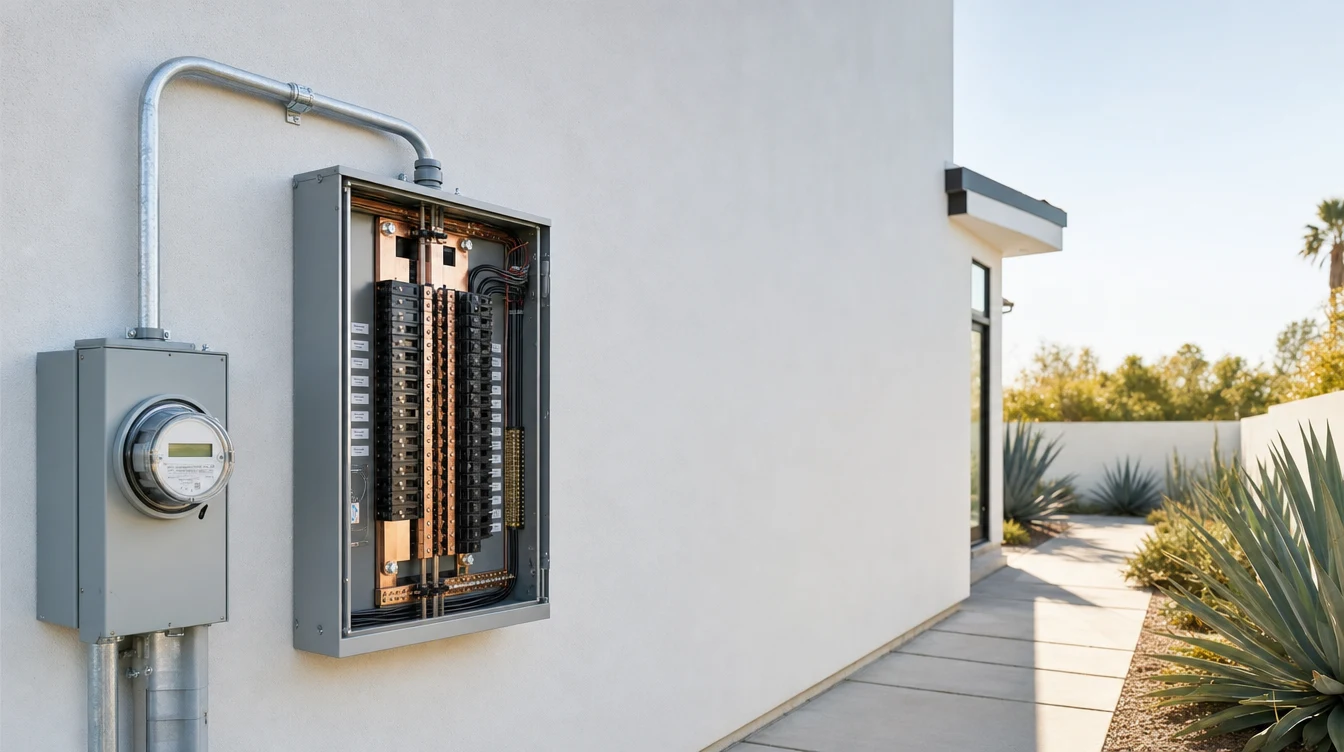
Your charger needs a double-pole breaker. That takes two slots. A full panel does not always mean a new service. A sub-panel or a tandem breaker can open room.
Your existing load
Two homes with the same 200-amp panel can land in different places. An all-electric home with a heat pump, electric range, and electric dryer has less headroom than a home that runs on gas. The load calculation catches this. Your neighbor's setup is a poor guide to yours.
Signs you will likely need an upgrade
- 100-amp service or smaller
- A full panel with no open slots and no room for a sub-panel feed
- A fuse box, or a panel from a brand with a known safety recall
- An all-electric home already running near its service rating
- Other big loads coming soon, like a Powerwall, a heat pump, or a second EV
Signs you are probably fine
- 200-amp service with open breaker spaces
- Gas heat, gas range, or gas water heater, which leaves more headroom
- A modern panel in good shape
- One EV and no other large loads planned
Ways to skip the upgrade
A panel upgrade is not your only option. Depending on the home, an electrician can often keep your existing service with one of these.
- A load-management device. It watches your home's real-time draw and throttles the charger when the house is busy, so you stay under your service rating. Code allows this in place of a service upgrade.
- A lower charge rate. Set the charger to 32 amps and it still adds over 100 miles overnight for most drivers, on a smaller circuit.
- A sub-panel, when the problem is breaker space rather than total capacity.
Which option fits depends on your load calculation. We size it to the home. You can ballpark the all-in cost first with our EV charger installation cost calculator.
What an upgrade adds
When an upgrade is required, a 200-amp panel replacement runs $1,000 to $4,000 on its own. It adds roughly $1,500 to $4,000 to an EV charger job, depending on panel location, the meter, and whether the utility gets involved.
It adds time too. A main-service upgrade means a permit, plus a utility disconnect and reconnect. Plan for more than an afternoon.
That is the case for running the load calculation up front. You learn whether you face a simple circuit add or a full service upgrade before you spend a dollar.
How we handle it
For most homes we can tell from photos of your panel and the charger spot, plus a few questions about your appliances. We run the load calculation. We tell you straight whether an upgrade is needed, and what it does to the price and the timeline. Permits get pulled either way. No surprises on install day.
Want to know where your home stands? See our electrical panel upgrade services and EV charger installation, or get a free EV charger quote and we will tell you if a panel upgrade is part of the job.