Before install day
Panel upgrades touch the utility connection, so the utility has to be in the loop. We file a service request after the quote is approved, which gets us a scheduled disconnect/reconnect window. The utility shows up at the start of the install to pull the meter and at the end to re-energize.
Permits go in parallel. Most jurisdictions issue a panel-upgrade permit within 1 to 5 business days.
The day before, we confirm the truck, the crew, and the arrival window. We also confirm the utility coordination time so everyone shows up in the right sequence.
Morning of: utility disconnect
The utility tech arrives first thing and pulls the meter. That kills power to the entire house. Solar systems shut down as well (they cannot back-feed an unenergized service).
Prepare for the power-off window: pull anything time-sensitive out of the fridge or move it to an ice cooler, run essential appliances in advance, and download anything you need on phones/tablets since WiFi will be out.
Panel removal and mount (1 to 2 hours)
The crew removes the old panel cover, photographs the existing circuit layout (so we can transfer the labels), and disconnects the existing branch circuits at the breakers.
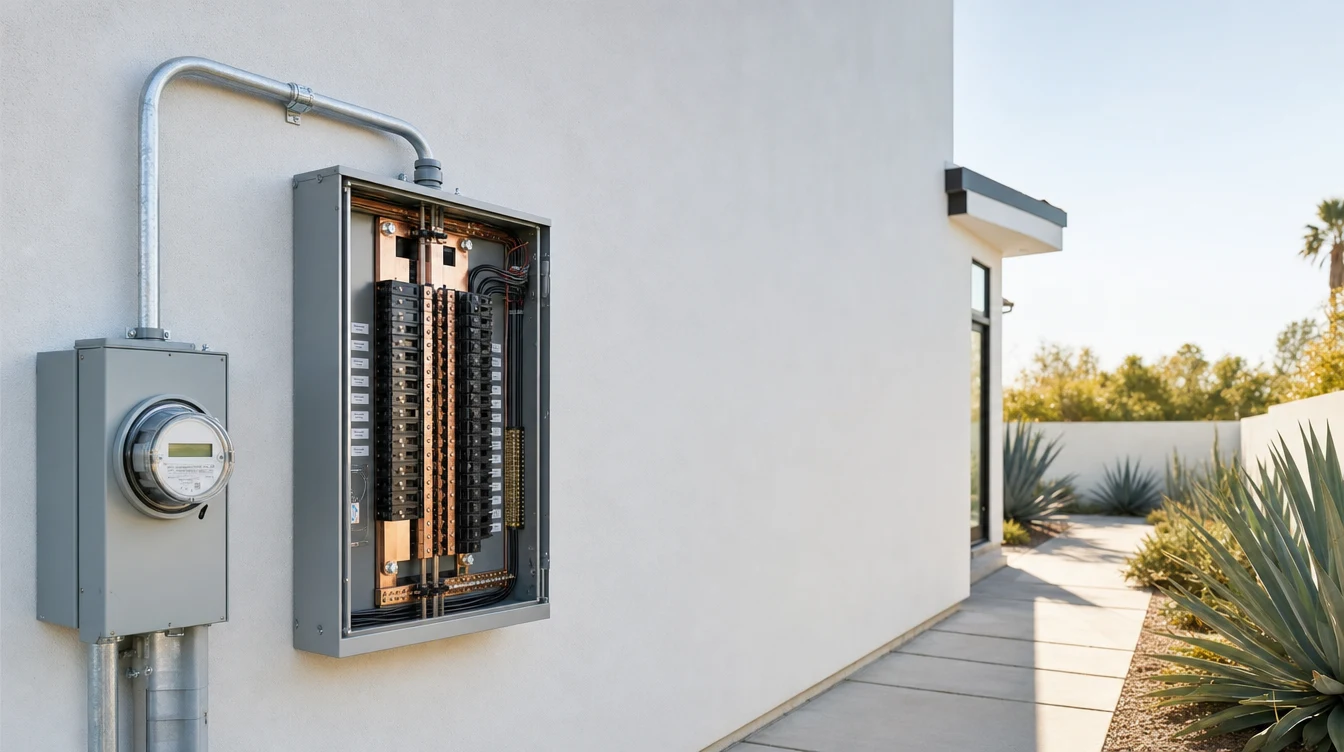
The old panel comes off the wall. The new panel mounts in the same location or close to it, depending on the existing service-entrance geometry. Service-side work (mast, weatherhead, grounding) happens here as needed.
Service entrance and grounding (1 to 2 hours)
The service entrance cables from the utility connect to the new panel main lugs. Grounding gets refreshed: a new ground rod (or two, depending on jurisdiction) and a clean bond to the cold-water main and to the panel.
Service-side bonding is the part of the panel upgrade that protects the whole house from a fault. Every connection torque-checked, every bond labeled.
Breaker transfer and labeling (2 to 4 hours)
Each existing branch circuit gets terminated at the new panel: breaker installed, wire fed through and torqued, and the breaker labeled. This is the slowest part of the day because every circuit has to be done carefully and the labels have to be accurate.
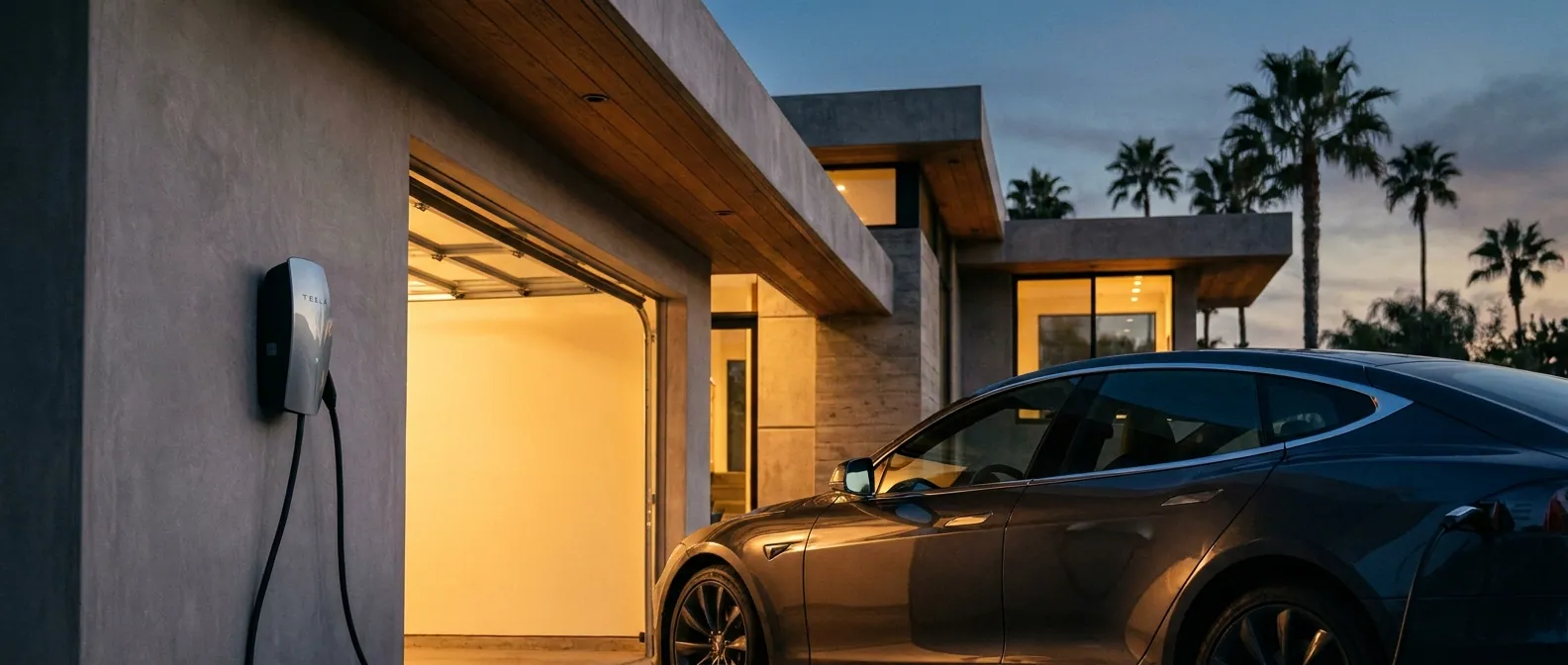
New circuits go in at the same time if the upgrade is part of an EV charger or Powerwall project. Adding the 240V circuits during the upgrade is the cheapest moment to do them.
Utility reconnect and test
The utility tech returns to reconnect the meter and re-energize. Power comes back on. The crew tests each circuit, walks through the house confirming everything works (lights, outlets, appliances, smoke alarms, garage doors), and resets clocks and electronics that need attention.
Total power-off time: typically 2 to 4 hours, sometimes longer for complex service-side work or service mast changes.
After install day
Inspection within 1 to 5 business days. The inspector verifies the panel, the grounding, the bonding, the breaker selection, the labeling, and the service entrance. After sign-off, the permit closes.
If the upgrade is part of an EV or Powerwall project, the federal energy-efficiency credit covers 30% of the qualifying panel work (capped at $600 per year).
Wrapping up
Panel upgrade is the load-bearing service that unlocks EV charging, solar, Powerwall, and heat-pump conversion downstream. See our electrical panel upgrade services or request a free panel upgrade quote.